
Every year on April 22nd, about one billion people in roughly 190 countries pause to think about the planet they live on. Some plant trees. Some join cleanups. Some just decide to be just a little bit more intentional...about what they buy, how they use energy, how much water runs through their yard on a Tuesday morning. In ways that might feel small individually, but add up to have real impact. Plus, that last category is actually bigger than it sounds. And it's where we think Tempest fits in.
A Brief, Surprisingly Interesting History of Earth Day
Despite it's green, sunny, and overall generally happy and bright branding, Earth Day wasn't born out of optimism. It was born out of anger. In 1969, a senator from Wisconsin, Gaylord Nelson watched 3 million gallons of crude oil spill into the Pacific Ocean off the coast of Santa Barbara, killing birds, fish, and marine life across 35 miles of coastline. He was furious. But instead of just staying that way, he organized.
On April 22, 1970, the first Earth Day happened. The date was chosen deliberately, timed to fall between spring break and final exams to maximize student turnout. It worked. Twenty million Americans, which was roughly 10% of the entire U.S. population at the time, took to the streets, parks, and campuses in what became the largest civic demonstration in American history.
Within a few years, the Clean Air Act, the Clean Water Act, and the Environmental Protection Agency all existed. One guy's idea. One organized day. Real, lasting change. Fifty-six years later, Earth Day has grown into the world's largest civic environmental event, officially observed in 193 countries. The belief that ordinary people making real choices can move things forward? Still holds.
Your Home Is a Good Place to Start
Most household environmental impact comes down to two things: energy and water. And most people are using more of both than they need to...not out of carelessness, but because they don't have great visibility into what's actually happening. That's exactly the kind of problem better local weather data helps solve.
-
Energy. Your HVAC is likely one of the biggest energy draws in your home, and a lot of that energy gets wasted responding to conditions that could have been anticipated. Knowing that a cool front is rolling in tonight, that outdoor temps are mild enough to open windows instead of running the AC, or even when to close those windows to maximize natural heating and cooling, lets you make smarter calls before the system kicks on. Small adjustments, made consistently, add up faster than you'd think.
-
Water. If you have a lawn or garden, there's a good chance it's being watered on a fixed schedule regardless of what the weather is actually doing. Tempest gives you hyperlocal rainfall totals, humidity readings, and forecast data so you can make that call accurately: skip the irrigation after a rainy stretch, run it ahead of a dry one. Most smart irrigation controllers can integrate with Tempest directly, which means this can essentially run itself once it's set up.
None of these changes require a lifestyle overhaul. They just require better data, and acting on it.
The Choices Behind the Product
The weather data Tempest collects helps people use energy and water more wisely, but we also consider sustainability in how our products are made, packaged, and designed to last.
When it came time to rethink our packaging, sustainability was a driving factor in who we partnered with and what we chose. That's what led us to Atlantic Packaging and Cruz Foam: a biodegradable foam made from natural, renewable materials that breaks down instead of sitting in a landfill for centuries. It was important to us that the experience of receiving a Tempest didn't come at a cost to the environment, and Cruz Foam made that possible. If you've received a Tempest order recently, that's what was cushioning your device.
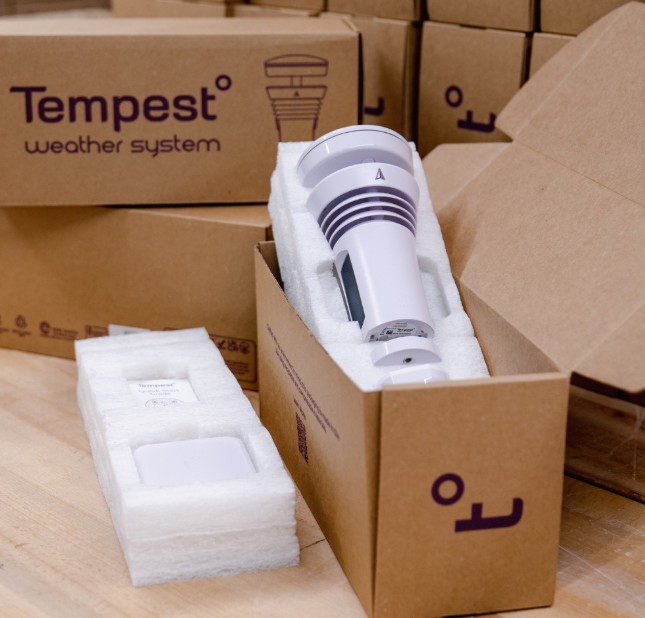
Last fall's launch of the Tempest '26 carried some of this same thinking into the hardware itself. The new model ships with larger solar panels, improving its ability to run on renewable energy day to day. And for the first time, the battery is user-replaceable, which matters more than it might seem. It means the unit doesn't become disposable the moment a battery degrades. Longer product lifespans, fewer devices in the trash. That's worth building for.
A Few Other Ways to Show Up Today
Earth Day is a reminder that the bar for participation isn't as high as it feels. You don't have to do everything, you just have to do something. For some people that's a community cleanup. For others it's finally setting up a smarter watering schedule. Both count. Consider:
-
Finding a local cleanup or event at earthday.org/events
-
Audit your home energy use - most utility providers offer free tools to help you spot where waste is hiding
-
Check your irrigation schedule and see if smarter triggers could cut even one unnecessary watering cycle a week
Happy Earth Day. 🌍 Get more information, photos, and more from the first Earth Day here.

Ready to put your Tempest data to work? See what's possible →
10 of Our Favorite Integrations
Back to: Articles, Smart Homes